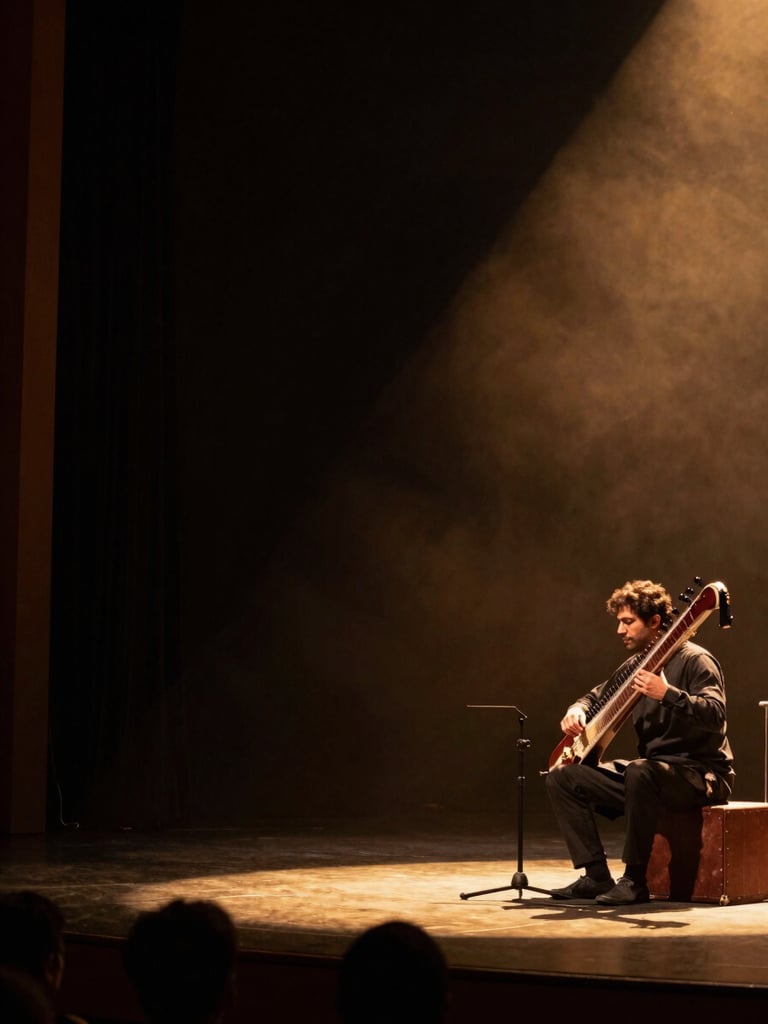
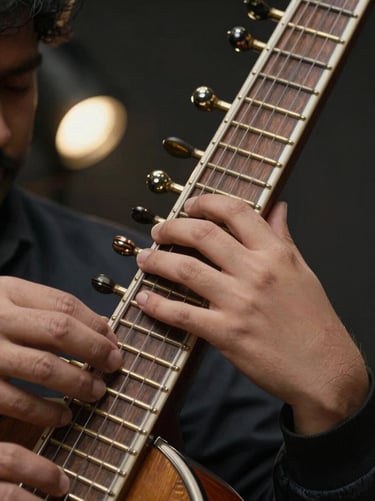
Wide archival concert photograph, a classical sitar performer seated on stage in a dimly lit mehfil hall, warm amber stage light falling from the upper right, the musician's profile visible against deep shadow, audience silhouettes in the near foreground, generous dark negative space to the left third of the frame
— North American Institution

Holding the Repertoire to Its Own Standard

We exist because the musicians we present have spent decades earning their knowledge. No other institution on this continent holds their work — or ours — to the standard they set.

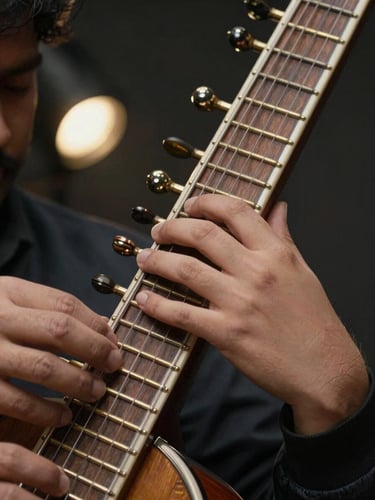
Extreme close-up of a student's left hand pressing sitar frets during instruction, teacher's hand visible at the edge of frame adjusting finger position, warm side-lighting from a single lamp source, dark background, the instrument's brass frets sharp in focus
/ Why We Were Founded

Transmission Cannot Be Substituted

Indus Classical Concepts Inc. was built around a single recognition: that the guru-shishya relationship — direct transmission from master to student — is not a teaching method but the art form itself. Remove it and what remains is performance without lineage.

Our programs commission working artists, fund instruction, and document active repertoire. Cultural impact is counted in students who can play — not in attendees who listened once and left.
Institutional Mission

Generational Knowledge Requires Generational Commitment

A raga takes years to inhabit. The ragas we work with have been passed down across centuries, through partition, diaspora, and institutional indifference. We exist to ensure that chain does not end here.

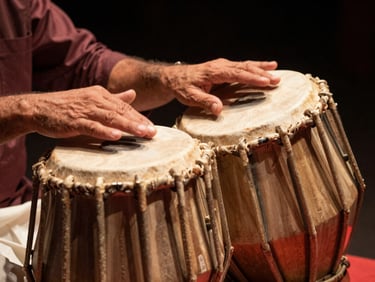
Close-up of a performer's hands on a tabla in active performance, warm golden side-light, dark studio background, the skin of the drum visible in sharp focus, no face shown
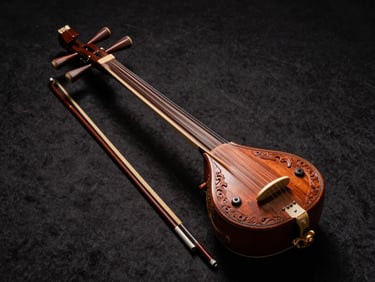
A sarangi resting on a dark cloth surface, shot from above at a slight angle, warm copper-toned studio light illuminating the instrument's carved wooden body and horsehair bow, deep shadow surrounding
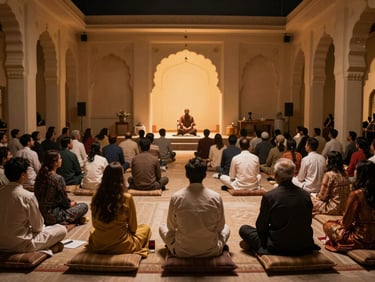
Wide shot of a small intimate mehfil gathering, audience seated on floor cushions in a low-lit room, a single performer visible at the far end under warm amber stage light, architectural arches in the background suggesting a heritage venue
▸ Who Carries the Work

Artists and Scholars, Not Administrators

Artistic Direction

Education Programs

Community & Outreach

Led by performing artists with active concert careers and verified lineage in their respective gharanas — Hindustani and Carnatic both represented in governance.

Workshop and training programs are designed with practising ustads and pandits, not curriculum consultants — the pedagogy matches the tradition it teaches.

Outreach is structured around diaspora communities in Canada and the United States — not as cultural tourism, but as institutional access to uncompromised classical programming.